|
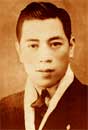 Lam
Cho came from Pan Chao in Guangshou. An orphan, he was adopted and raised
by his uncle, Lam Sai Wing. When his uncle went to Hong Kong, he went with him to
learn martial arts. He was blessed with quick arms, a strong body, and
superior physical dexterity. His uncle loved him as his own son, and
taught him in the authentic martial arts tradition. He was highly
intelligent, and quick to understand all the different styles of kung fu.
Throughout his twenty years with his teacher, he accumulated vast
experience in kung fu and the art of Chinese medicine. By virtue of his
medical expertise, he helped thousands of people. Lam
Cho came from Pan Chao in Guangshou. An orphan, he was adopted and raised
by his uncle, Lam Sai Wing. When his uncle went to Hong Kong, he went with him to
learn martial arts. He was blessed with quick arms, a strong body, and
superior physical dexterity. His uncle loved him as his own son, and
taught him in the authentic martial arts tradition. He was highly
intelligent, and quick to understand all the different styles of kung fu.
Throughout his twenty years with his teacher, he accumulated vast
experience in kung fu and the art of Chinese medicine. By virtue of his
medical expertise, he helped thousands of people.
As a young man, he was already helping his Sifu in
teaching at the Southern Martial Arts Association and eventually set up
his own kung fu studio. His skill was so well known, that people
thoughout the South referred to him as Sifu even as a young man. He set
up another studio in Kowloon,
where thousands of students trained.
 His
closest students set up studios to teach as well; thus, those who had his
teaching spread across Hong Kong
and Guangzhou,
and the Hung Gar style became a shining example of excellence in martial
arts. Many of Lam Cho's students in turn become well known martial
artists and respected figure within the Chinese Martial Arts circles
around the world. Some of them have opened up Kung Fu schools of great
renown. His
closest students set up studios to teach as well; thus, those who had his
teaching spread across Hong Kong
and Guangzhou,
and the Hung Gar style became a shining example of excellence in martial
arts. Many of Lam Cho's students in turn become well known martial
artists and respected figure within the Chinese Martial Arts circles
around the world. Some of them have opened up Kung Fu schools of great
renown.
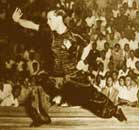
Grandmaster Lam was well respected and was invited
to give demonstrations for the Navy and Army. Both Chinese and foreigners
complimented his performance, and his photo was soon appearing in London
newspapers. The school of martial arts spread throughout the globe,
enhancing the reputation of the Lam family and the Hung Gar style.
Grandmaster Lam traveled far and wide, and never tired of teaching the
style his Sifu taught him. He was especially happy and willing to help newcomers
to the art. Many of the students that he trained went on to develop great
reputations for themselves. All were grateful for his noble deeds, but
grandmaster Lam remained humble and peaceful, and was therefore well
respected.
 When
the Japanese invaded Hong Kong,
grandmaster Lam's studio burned down, and fighting broke out all across
the city. Grandmaster Lam helped maintain the peace and aided the people
in their suffering, and his deeds are still remembered to this day. When Hong Kong fell, the Japanese
forces went looking for grandmaster Lam, so he returned in secrecy to his
village. When the people of his village heard of his return, they
immediately entreated him to teach martial arts. Finally, after Hong Kong was liberated, he
returned to Hong Kong
and set up his studio. He taught, gave medical care, and served as
national martial arts consultant for various unions and workers
associations. His medical skill was superb, and his principles were
especially admirable; he did not take more from the rich, but nonetheless
reduced his fees for the poor, to the point of providing free service and
medicine. He was compassionate and generous. He accomplished a great deal
in his youth, and still enjoys researching and discussing medicine and
martial arts every day. The future still holds much in store for
grandmaster Lam. His eldest son, Lam Chun Fai, now carries on his Hung
Gar teaching. When
the Japanese invaded Hong Kong,
grandmaster Lam's studio burned down, and fighting broke out all across
the city. Grandmaster Lam helped maintain the peace and aided the people
in their suffering, and his deeds are still remembered to this day. When Hong Kong fell, the Japanese
forces went looking for grandmaster Lam, so he returned in secrecy to his
village. When the people of his village heard of his return, they
immediately entreated him to teach martial arts. Finally, after Hong Kong was liberated, he
returned to Hong Kong
and set up his studio. He taught, gave medical care, and served as
national martial arts consultant for various unions and workers
associations. His medical skill was superb, and his principles were
especially admirable; he did not take more from the rich, but nonetheless
reduced his fees for the poor, to the point of providing free service and
medicine. He was compassionate and generous. He accomplished a great deal
in his youth, and still enjoys researching and discussing medicine and
martial arts every day. The future still holds much in store for
grandmaster Lam. His eldest son, Lam Chun Fai, now carries on his Hung
Gar teaching.
|